


In the summer of 1907, women in Iceland went on strike for the first time, for half a day. Women working at a fish factory in the town of Hafnarfjörður laid all the fish out in the morning but refused to gather them again in the afternoon unless their pay was raised. When it started to rain, their employer had no choice but to agree to their demands.
Since then, Icelandic women have often gone on strike to demand better conditions and wages. To begin with, many labour unions refused to admit women into their organisations, leading women to found their own unions. Women typically got paid less than male employees for doing the same jobs. Work traditionally considered women’s work was also paid less than work typically done by men. Many saw men as the breadwinners of the home, and as such, men were prioritised in the work environment. In reality, though, many women were working in order to provide for their families. The working-class struggle of women was thus entwined with the women’s rights movement from the beginning.
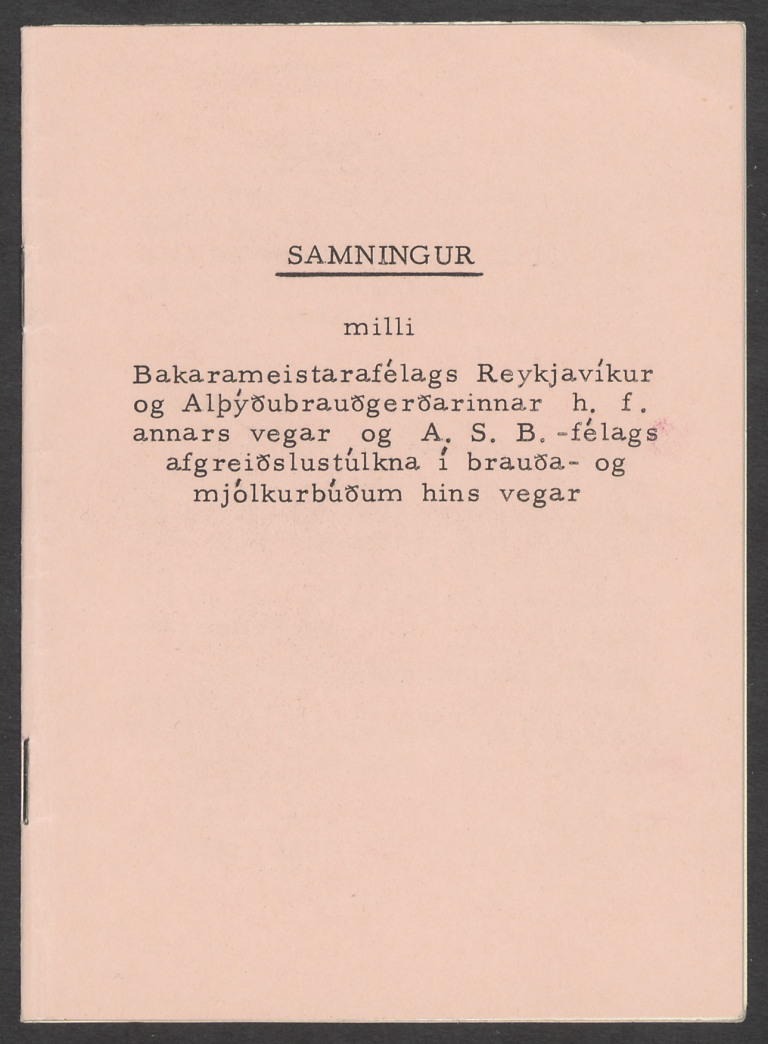
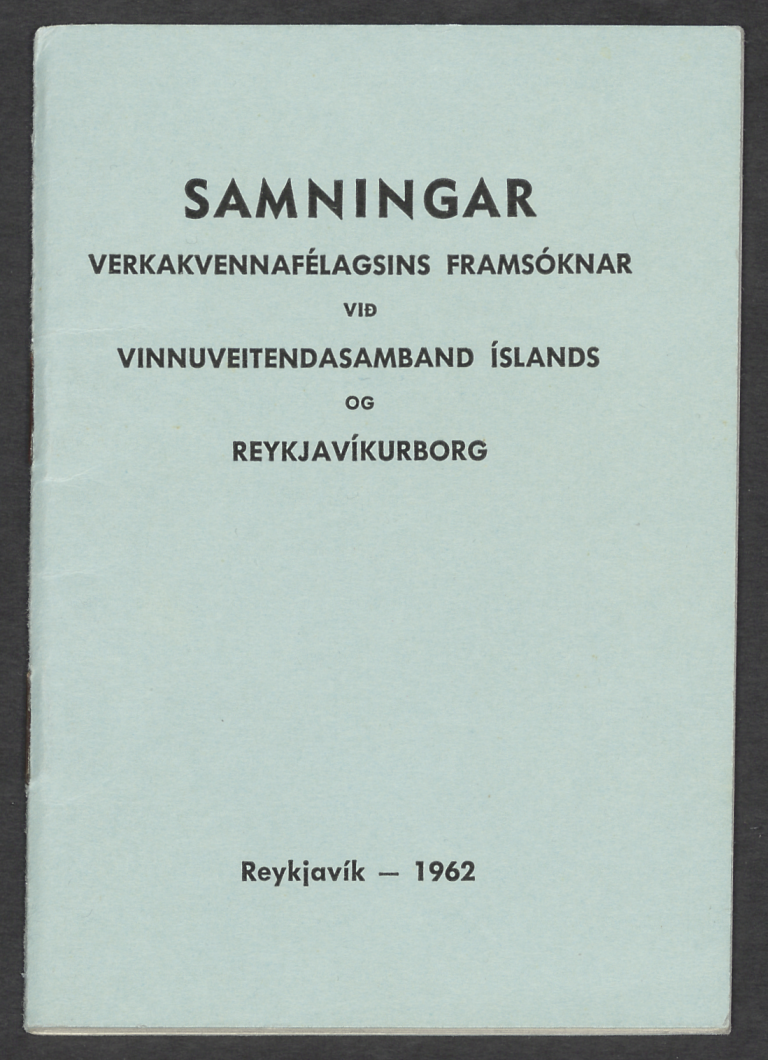
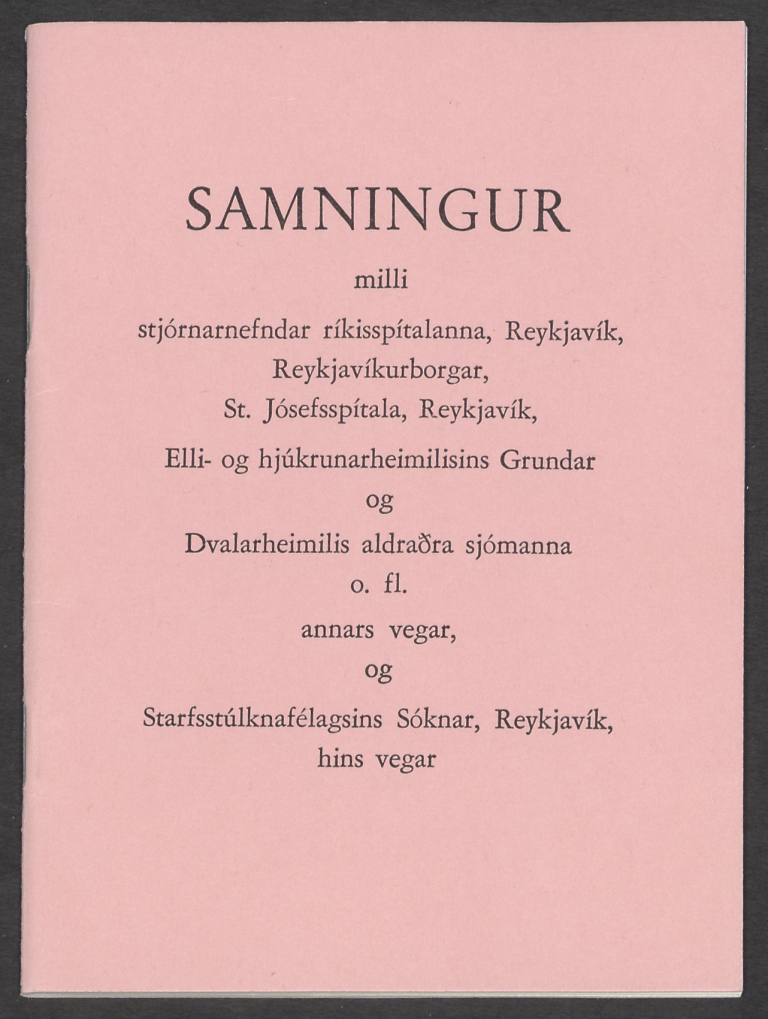
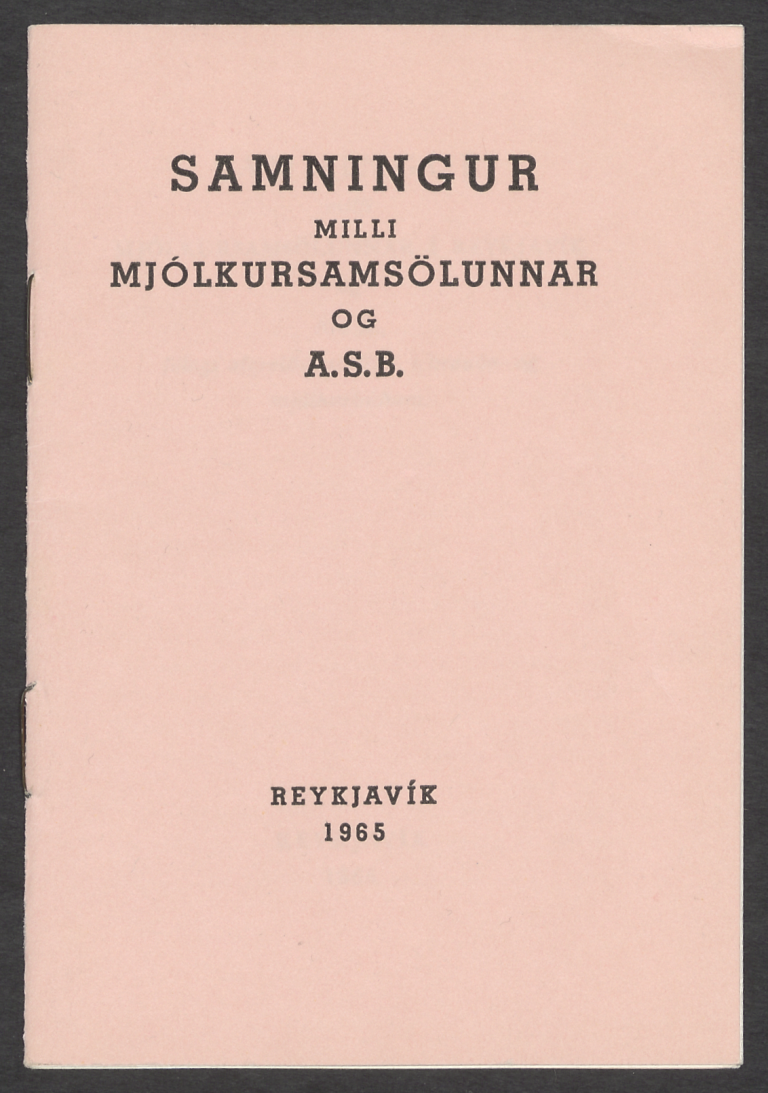
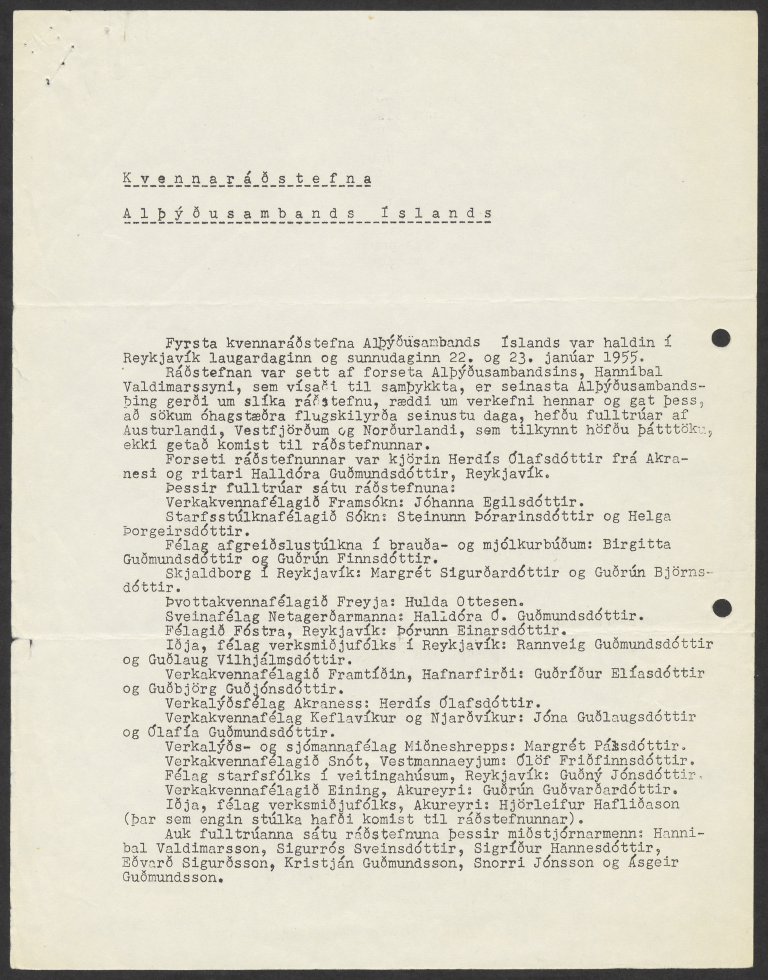
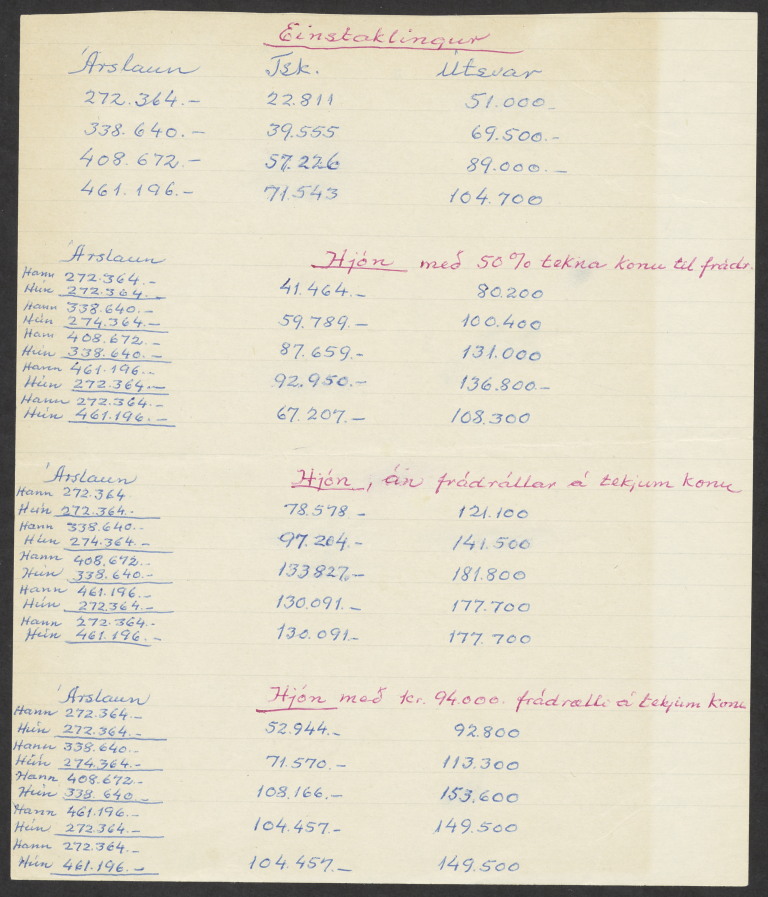
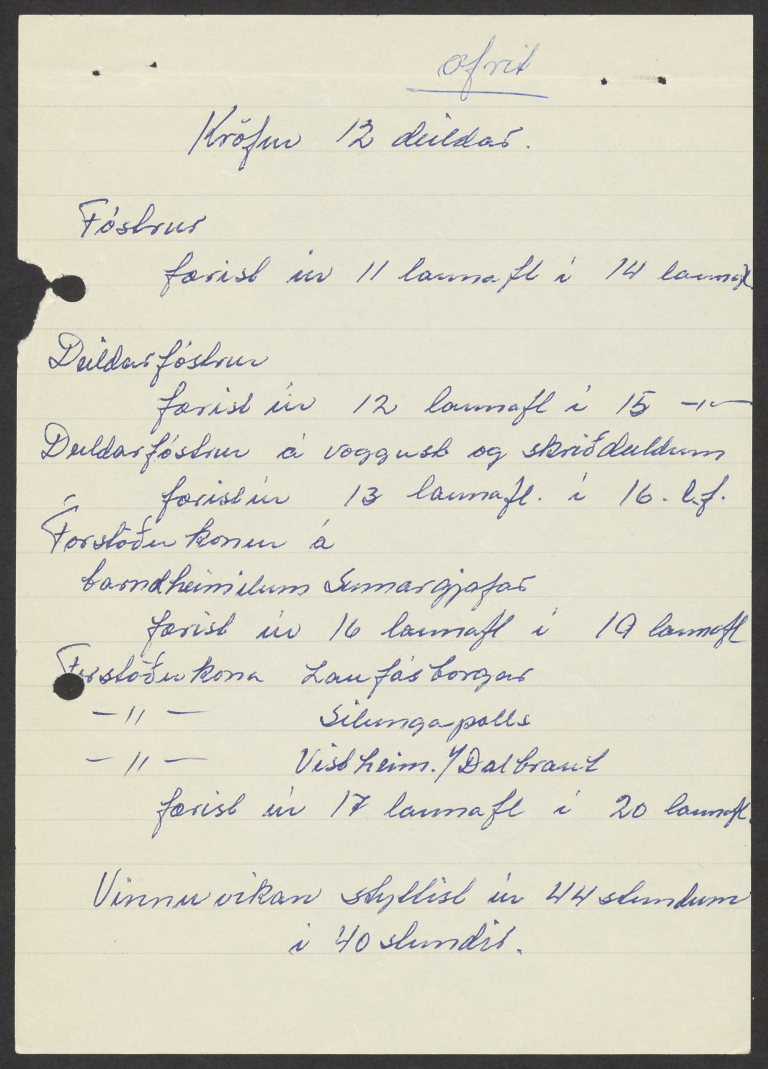
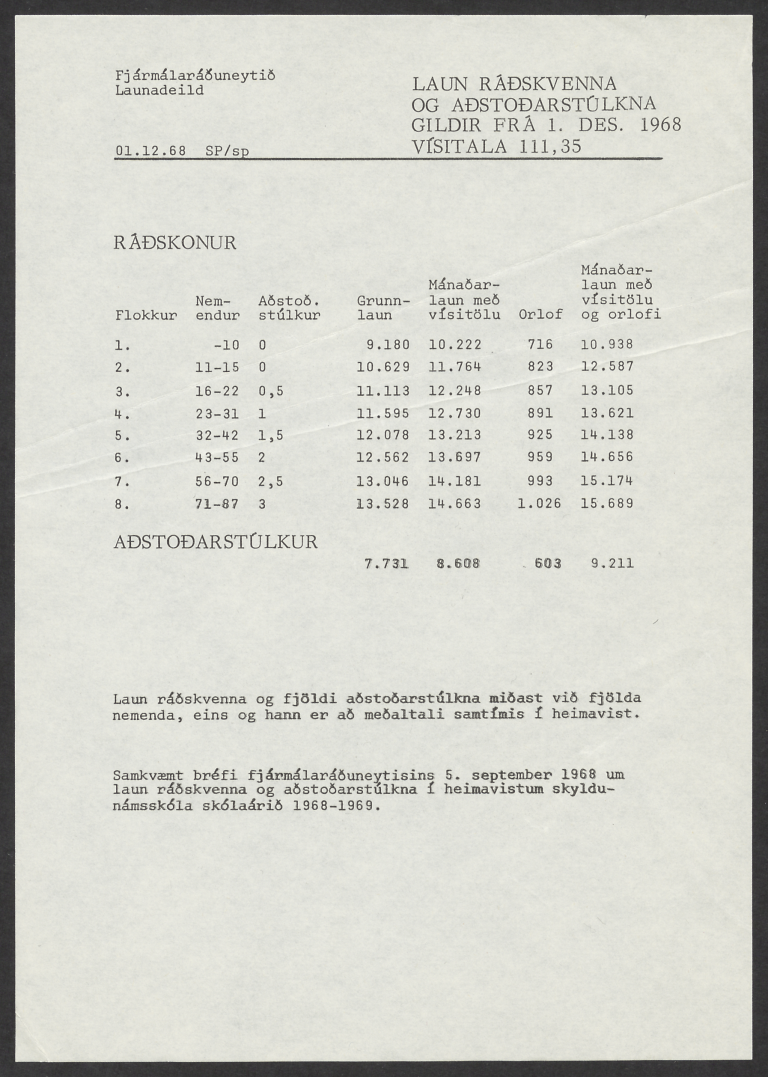
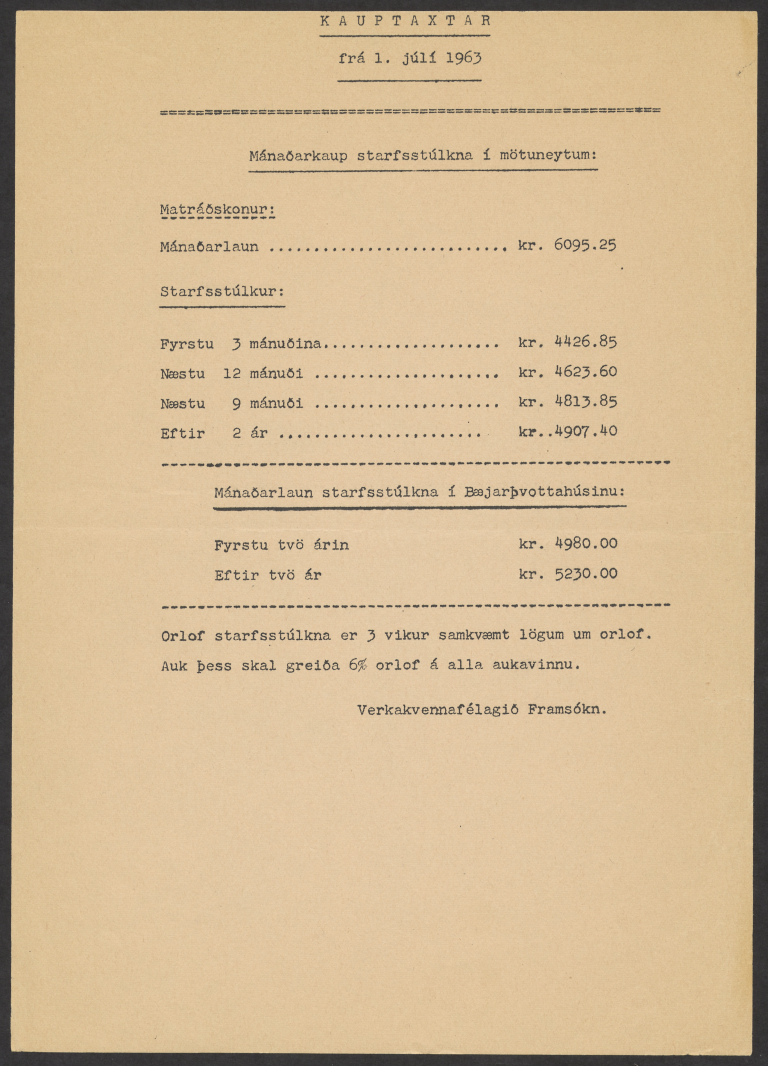
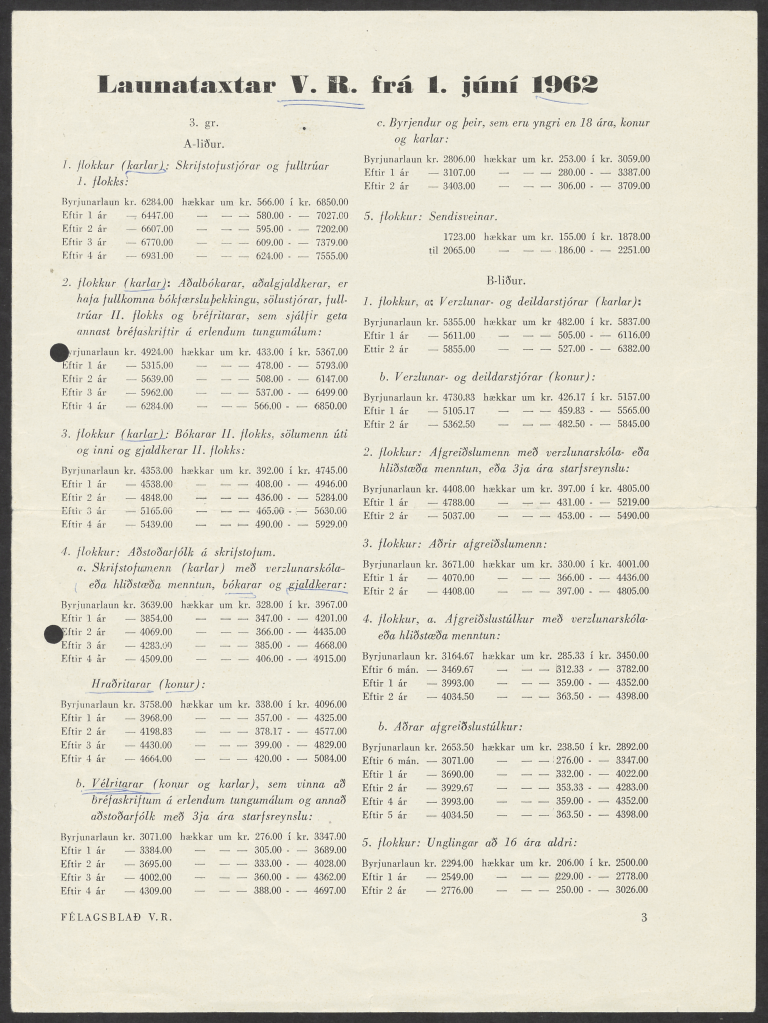
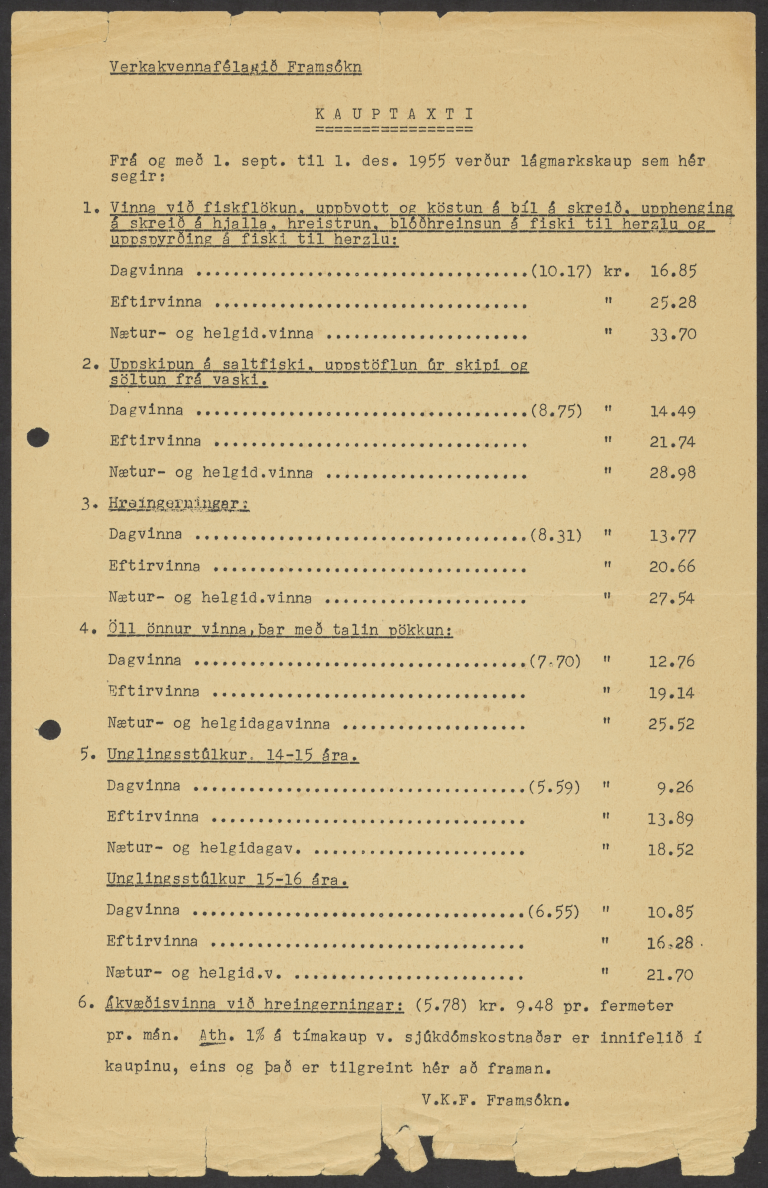
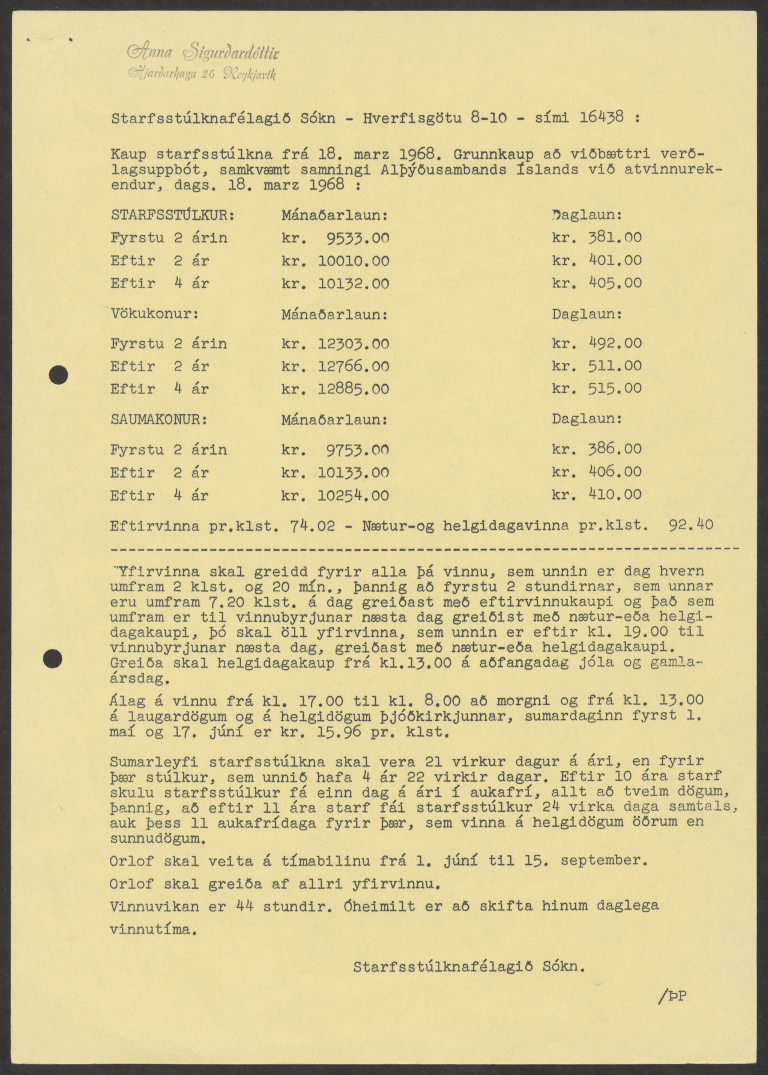
The Women’s History Archives hold a great many documents about women’s wages and their fight for better pay and conditions. The table of housekeepers’ wages, the pay rates of the Reykjavík Commercial Workers’ Union and the information about the women’s conference of the Icelandic Confederation of Labour are from Anna Sigurðardóttir’s collection. The memo on the demands of the 12th division is from the collection of the Icelandic Association of Preschool Teachers. The pay rates of the women workers’ unions Framsókn and Sókn and the table of wages for women working in canteens are from Anna Sigurðardóttir’s collection. The handwritten sheet on the wages of individuals and married couples is from the collection of Adda Bára Sigfúsdóttir, meteorologist and city councillor.